


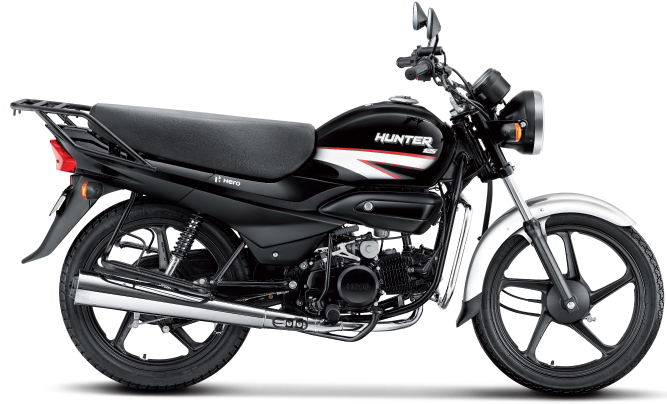
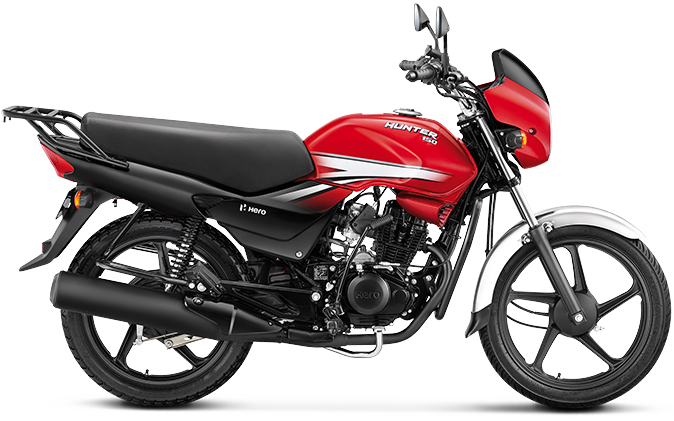
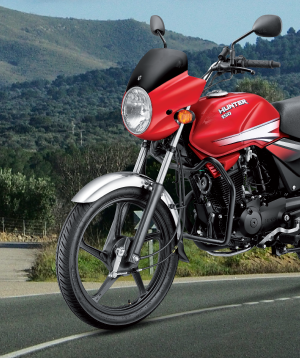









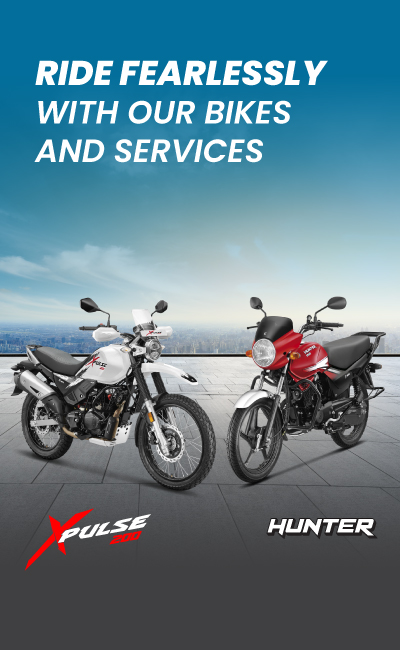
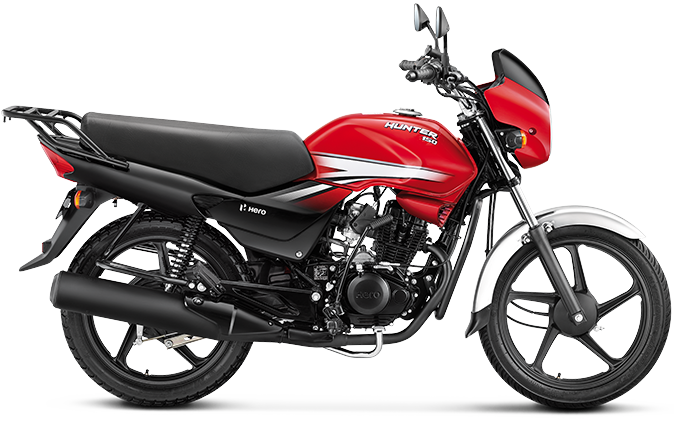
Our Hunter 150 is built to be a reliable, no-nonsense commuter that handles both crowded city streets and rough village tracks with confidence. Whether you’re weaving through Kampala traffic or tackling dusty, uneven roads outside town, this motorcycle balances comfort, practicality, and the kind of durability riders in Uganda value.
Below, we take you through the standout features of our Hero Hunter 150cc and show why it’s a smart choice for mixed urban and rural use.
Rugged, user-friendly powertrain
At the heart of the Hunter 150 is a tuned engine that delivers usable power when you need it. The bike’s maximum power is 13BHP @ 8000 rpm, giving you the punch required for quick overtakes in the city and steady progress on country roads. That power figure translates to confidence on inclines and enough low-end torque to navigate uneven village paths without constantly revving the engine.
Easy starting — everyday convenience
One small feature that becomes a big advantage in daily use is the Power Start.
A reliable electric starter removes the hassle of kick-starting on the roadside or during morning commutes, which is especially handy after overnight cooling or when you’re in a hurry to get to work.
For riders who value quick, fuss-free starts, this is a welcome convenience.
Comfort for two — long flat seat
Long rides, whether a long run to a nearby town or a school drop-off routine, demand comfort. The Hunter’s Long Flat Seat provides ample space for rider and pillion, allowing both to sit more naturally and comfortably for extended periods.
This design, at the economic Hero Hunter 150cc price in Uganda, also makes the bike more family-friendly, as it is easy to carry a passenger or a small load and remains comfortable and stable even on longer, bumpy stretches.
Practical load-carrying with extra-long rear carrier
Many riders in villages and towns regularly carry goods, groceries, school bags, or small parcels. The Extra Long Rear Carrier on the Hunter 150 is a practical plus. It supports securing larger items safely and gives you the flexibility to mount a small basket or strap down cargo for errands or small business activities without compromising balance.
Fuel range and day-to-day economy
For daily commuters and rural riders, fuel capacity matters. The Hunter’s Fuel Tank Capacity: 13 litres with a Reserve: 1 litre is a thoughtful combination, it gives a good riding range between fill-ups and a built-in reserve for peace of mind when stations are sparse. Paired with sensible fuel consumption from the 150cc class engine, this tank size helps reduce the number of refuelling stops on long village runs or longer inter-town commutes.
Practical handling for mixed roads
The Hunter’s geometry and chassis are tuned for stability and predictable handling. That means comfortable city lane-splitting and agile responses at low speeds, yet enough stability for higher-speed stretches and loose gravel.
Suspension travel and tyre choice (designed for mixed surfaces) work together to absorb potholes and rough patches, reducing rider fatigue and keeping passengers comfortable.
Low maintenance, dependable ownership
One of the strengths of the Hunter 150 is its straightforward engineering, with parts readily accessible and maintenance routines simple. For riders in Uganda who prioritise bikes that can be serviced locally without specialised tools, this simplicity keeps ownership costs reasonable and downtime minimal.
Value and availability
If you’re researching options, it’s useful to compare both purchase and running costs. For shoppers checking local dealerships, you’ll find the model discussed online and in markets under the search term Hero Hunter 150. If budget is a key factor, also check our Hero Hunter price in Uganda and ask dealers for the Hunter 150 on road price so you can compare total ownership cost, not just the sticker price.
Ready to explore more? Check the local Hero MotoCorp showroom for the on-road price and take a test ride of our Hunter 150, as nothing beats experiencing the comfort and handling firsthand.
 Angola
 Argentina
 Bangladesh
 Bolivia
 Colombia
 Costa Rica
 Dominican Republic
 DRC
DRC
 Ecuador
 El Salvador
 Ethiopia
 France
 GCC
GCC
 Germany
 Great Britain
 Guatemala
 Guinea
 Guyana
 Haiti
Haiti
 Honduras
 India
India
 Italy
Italy
 Kenya
Kenya
 Madagascar
 Mexico
 Myanmar
 Nepal
Nepal
 Nicaragua
 Nigeria
 Panama
 Peru
Peru
 Philippines
 South Africa
 Spain
Spain
 Sri Lanka
 Tanzania
 Trinidad
 Turkey
 Zambia